The laboratory is developing a new method of personalized drug therapy for cancer patients, which includes establishment of a three-dimensional culture of tumor organoids, followed by a personalized test of chemotherapeutic and targeted drugs to determine the most effective therapy for each individual patient.
We maintain cooperation with National Medical Research Radiological Center, Shemyakin–Ovchinnikov Institute of bioorganic chemistry RAS, Scientific and Technical Center BioClinicum and University Medical Center Hamburg-Eppendorf.
News

A press release has been released on the HSE website (https://www.hse.ru/news/science/1152167635.html) based on an article about the unique properties of miR-93-5p microRNA (published in the journal PeerJ https://peerj.com/articles/20642/). HSE researchers have discovered an atypical behavior of oncogenic miR-93-5p microRNA in prostate cancer. It turned out that its various isoforms do not change the spectrum of target genes, but rather enhance each other's effects.

Tests of the modern 3D FloTrix MicroSpin bioreactor from Cytoniche, designed for the cultivation of adhesive cells using microcarrier technology, have begun at the international Laboratory of Microphysiological Systems
%20(1).png)
miR-93-5p microRNA in prostate cancer retains a similar set of targets even with the formation of 5’ isoforms. This indicates the stability of its regulatory function to structural variations.
.jpg)
Diana Maltseva, Head of the International Laboratory of Microphysiological Systems, has begun teaching her updated lecture course “Matrix Processes.” The course focuses on the latest understanding of fundamental cellular processes and highlights key discoveries made in this field in recent years

The International Laboratory of Microphysiological Systems has implemented an automated system for preparing polyacrylamide gels of various compositions, as well as a robotic workstation for immunoblotting, into its research workflow
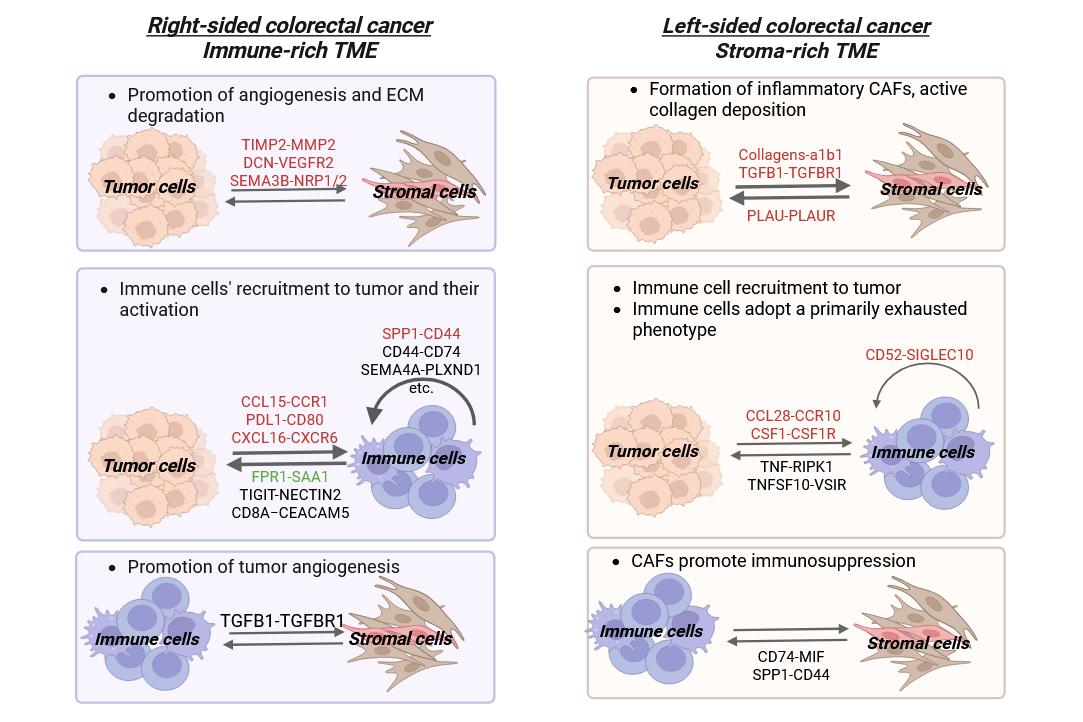
Researchers from the International Laboratory of Microphysiological Systems have presented a review devoted to single‑cell analysis of colorectal cancer. The article systematises current data obtained using single‑cell RNA‑sequencing technologies, with a particular focus on the fundamental differences between left‑ and right‑sided tumours

Diana Vasilievna spoke about the laboratory's work to Vyshka.Glavnoe
An employee of the International Laboratory of Microphysiological Systems took part in the International Conference for Young Scientists “Genetic Technologies in Biomedicine”

The International Laboratory of Microphysiological Systems is pleased to share an interview given by junior research fellow Maria Yanova as part of the “Young Scientists” project. In this inspiring piece, Maria tells her own story in science
%20(4).jpg)
Knockdown of CD44 in colorectal cancer tumours alters the expression of microRNAs and their targets involved in epithelial–mesenchymal transition and the Notch signalling pathway, both of which are associated with tumour metastasis