
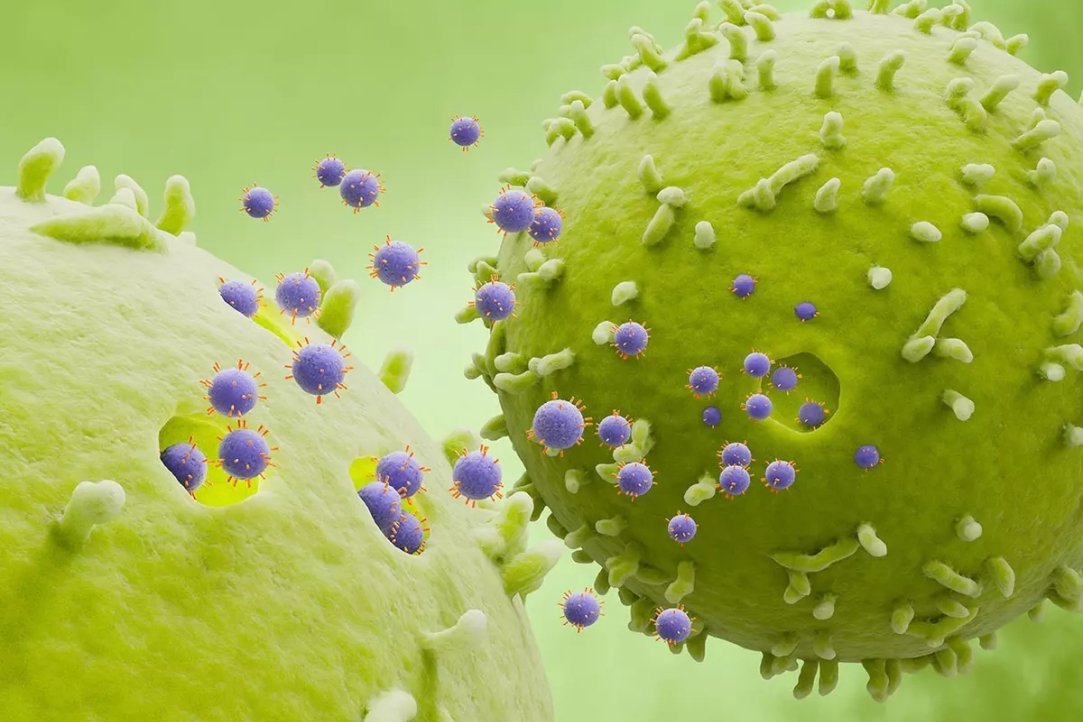
Evolution of the SARS-CoV-2
As part of the study, researchers of the Laboratory for Research on Molecular Mechanisms of Longevity was able to demonstrate that microRNAs in human lung tissue exert evolutionary pressure on the SARS-CoV-2 genome.
A series of seminars and practical classes of the Laboratory «Methods of tissue engineering using click chemistry»
From October 17 to 28, 2022 a series of seminars and workshops led by Dmitri Rogozhnikov took place at the Research on Molecular Mechanisms of Longevity.
COVID-19 T-Cell Atlas: HSE Researchers Develop a Comprehensive Web Portal
Laboratory for Research on Molecular Mechanisms of longevity, in collaboration with other departments of the Faculty of Biology and Biotechnology (HSE University), developed the COVID-19 T-cell atlas - a comprehensive web portal, which allows to analyze how SARS-CoV-2 mutations change the presentation of viral peptides.
Seminar of the Laboratory 'Biology of the SARS-CoV-2 virus'
At the meeting of the seminar, a student of the 3rd year of study of the bachelor's program 'Cellular and Molecular Biotechnology' Fedor Polyakov reviewed the article Kim D et al. A high-resolution temporal atlas of the SARS-CoV-2 translatome and transcriptome. Nat Commun. 2021 Aug 25;12(1):5120 (doi: 10.1038/s41467-021-25361-5).