
Review on Modern Telomere Length Measurement Approaches Accepted for Publication in an International Journal
A review article by researchers of the Laboratory of Molecular Mechanisms of Longevity on modern approaches to telomere length measurement has been accepted for publication in the journal Frontiers in Molecular Biosciences
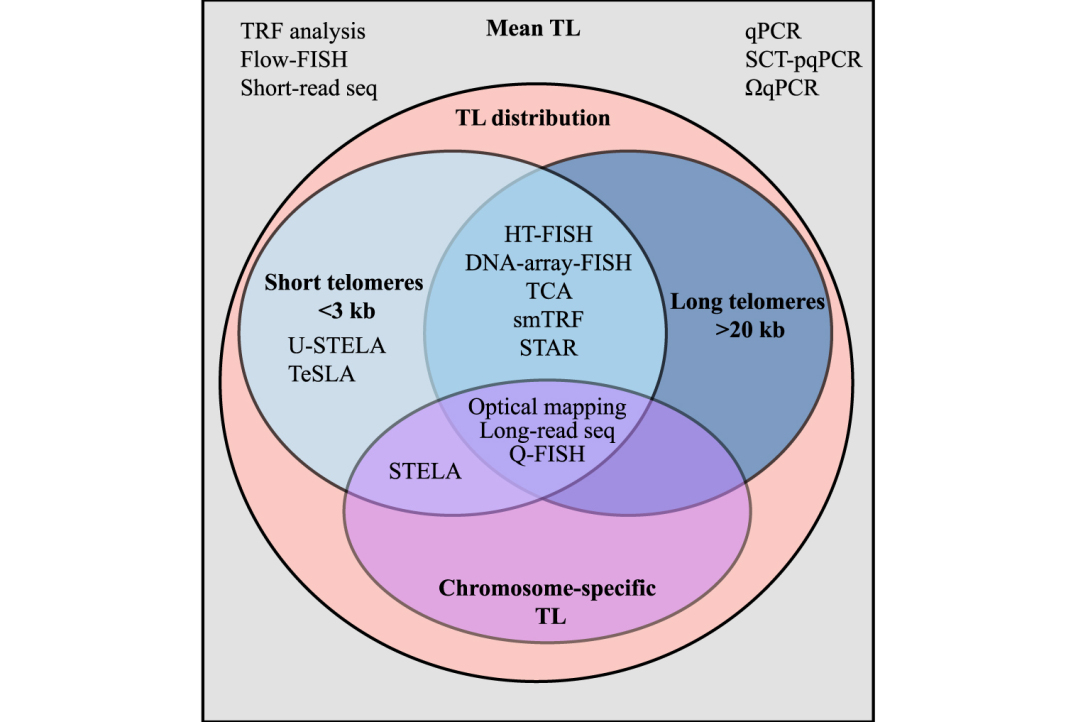
The review summarizes more than two dozen existing methods for assessing telomere length, including TRF, Q‑FISH, qPCR, and long‑read sequencing‑based technologies. It discusses the advantages and limitations of each approach, presents a comparative table of methods, and lists available bioinformatics tools.
Telomeres are DNA–protein complexes located at the ends of chromosomes. Telomere length decreases with each somatic cell division, which allows it to be considered one of the markers of cellular ageing; changes in telomere length are also associated with a number of age‑related diseases, lifestyle factors, and the development of malignant neoplasms. Given the high interest in this field, new methods for measuring telomere length have been actively emerging in recent years, and existing approaches are regularly being updated. One of the most rapidly developing directions is long‑read sequencing, which makes it possible to analyse telomere length and nucleotide composition at the level of individual chromosome ends, and this approach receives particular attention in the review.
The article is intended to help researchers choose the optimal method depending on the goals of a specific project, as well as the required accuracy, resolution, and throughput. The authors of the review are: Yu. A. Makarova, U. D. Belova, M. E. Zvereva, M. Yu. Shkurnikov, and A. G. Tonevitsky.
